No Heating or Hot Water? Check Your Boiler Pressure
- Posted On: 24 Aug 2021
Low boiler pressure is one of the most common reasons a boiler stops working.
Before reporting a repair, it is worth checking the pressure gauge on your boiler. In many cases, restoring the pressure can get your heating and hot water working again within a few minutes.
Most boilers have a lever, tap or filling loop that is designed for the occupier to use. The good news is that you do not need to be a plumber to top up the pressure.
Step 1: Check the Pressure Gauge
Most boilers have either:
- A pressure gauge with a needle, or
- A digital pressure reading on the display
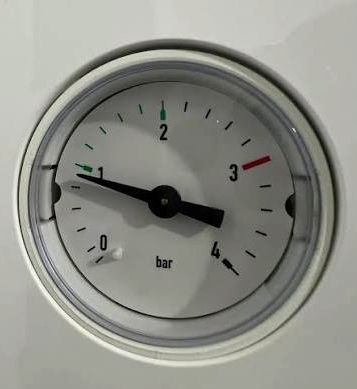
If the pressure is below 1 bar, your boiler may stop providing heating or hot water.
Step 2: What Should the Pressure Be?
Most boilers operate correctly at around 1.0 to 1.5 bar.
A pressure reading of around 1.5 bar is usually ideal.
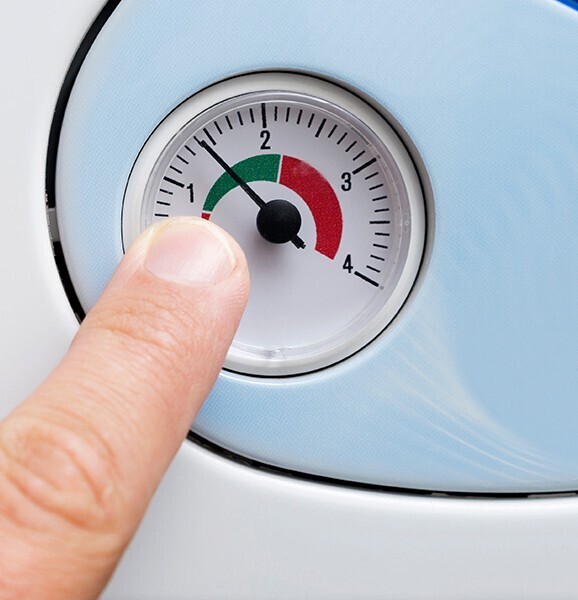
If your pressure is below 1 bar, it is worth topping it up.
Step 3: Find Your Boiler Make and Model
Every boiler is slightly different, so the easiest way to top up the pressure is to follow instructions for your specific boiler.
The make and model are usually shown on the front of the boiler.
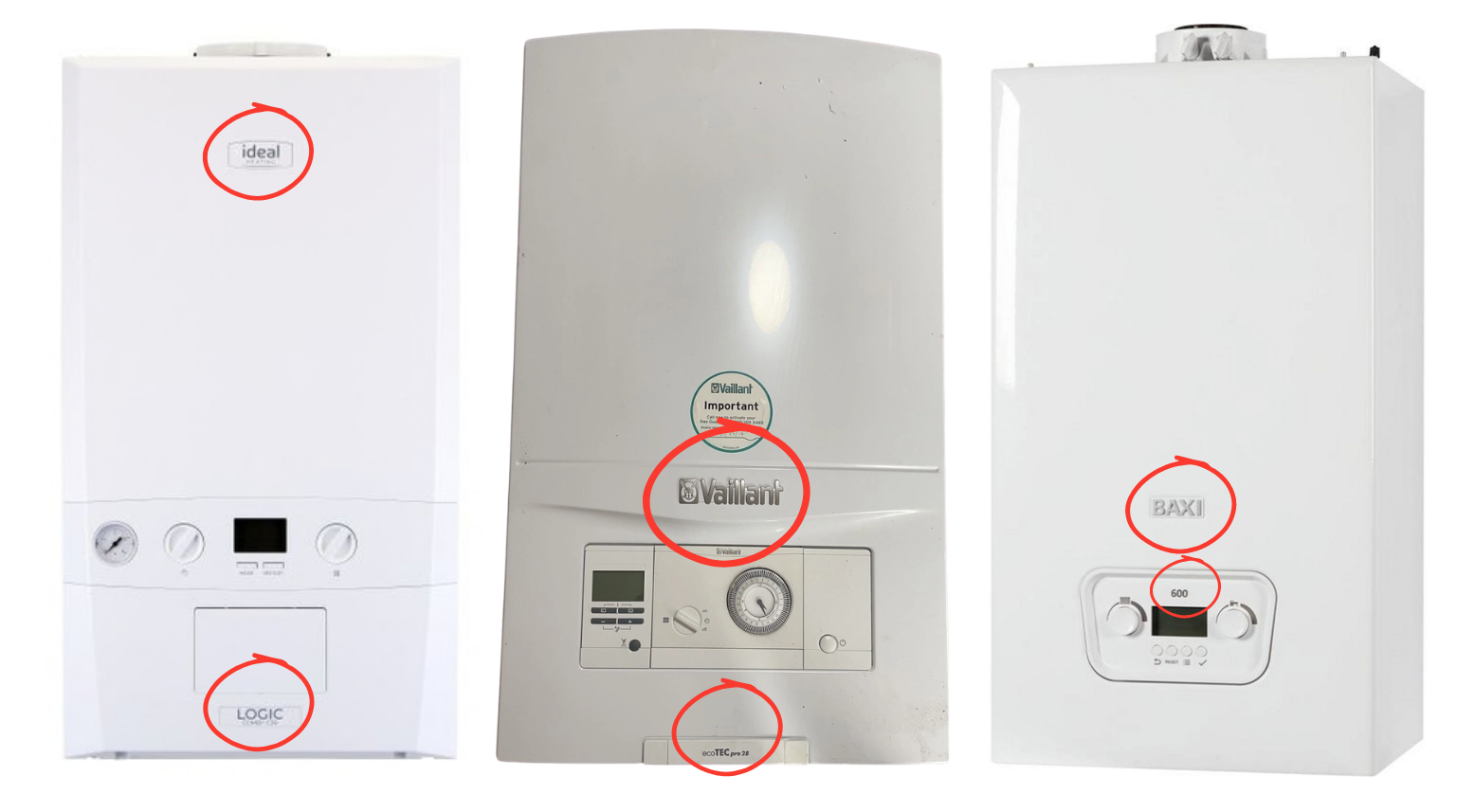
Common examples include:
- Ideal Logic C30
- Vaillant EcoTEC Pro
- Worcester Bosch Greenstar
- Baxi 600
Step 4: Find Instructions for Your Boiler
Once you know your boiler make and model, search YouTube for:
How to top up pressure on [your boiler make and model]
A short video is often the quickest and easiest way to see exactly what you need to do.
Example Guides
- Ideal Logic C30: How to: Top Up the Pressure on Your Ideal Logic Max C30
- Vaillant EcoTEC Pro: How to Top Up Pressure on a Vaillant ecoTEC Pro 28
- Baxi 600: How to Top Up Your Boiler Pressure Using the Easy Fill Filling Loop
- Worcester Bosch Greenstar: How to Re-Pressurise a Worcester Greenstar Boiler
If your boiler model isn't listed above, simply search YouTube for your exact make and model. There is usually a video available showing the correct procedure.
Step 5: Top Up the Pressure
⚠️ We strongly recommend following a video guide for your specific boiler make and model, as the filling process varies between boilers.
Depending on your boiler, you may have either:
- An Easy Fill lever, or
- A filling loop with valves or taps
If you are following a video guide, the process will usually involve:
- Opening the filling loop valves or Easy Fill lever slowly.
- Watching the pressure gauge as it rises.
- Stopping when the pressure reaches approximately 1.5 bar or the middle of the green section.
- Returning the filling loop taps, valves or lever to their original position.
⚠️ This final step is important. Leaving the filling loop open can cause the pressure to continue rising and may lead to other issues with the heating system.
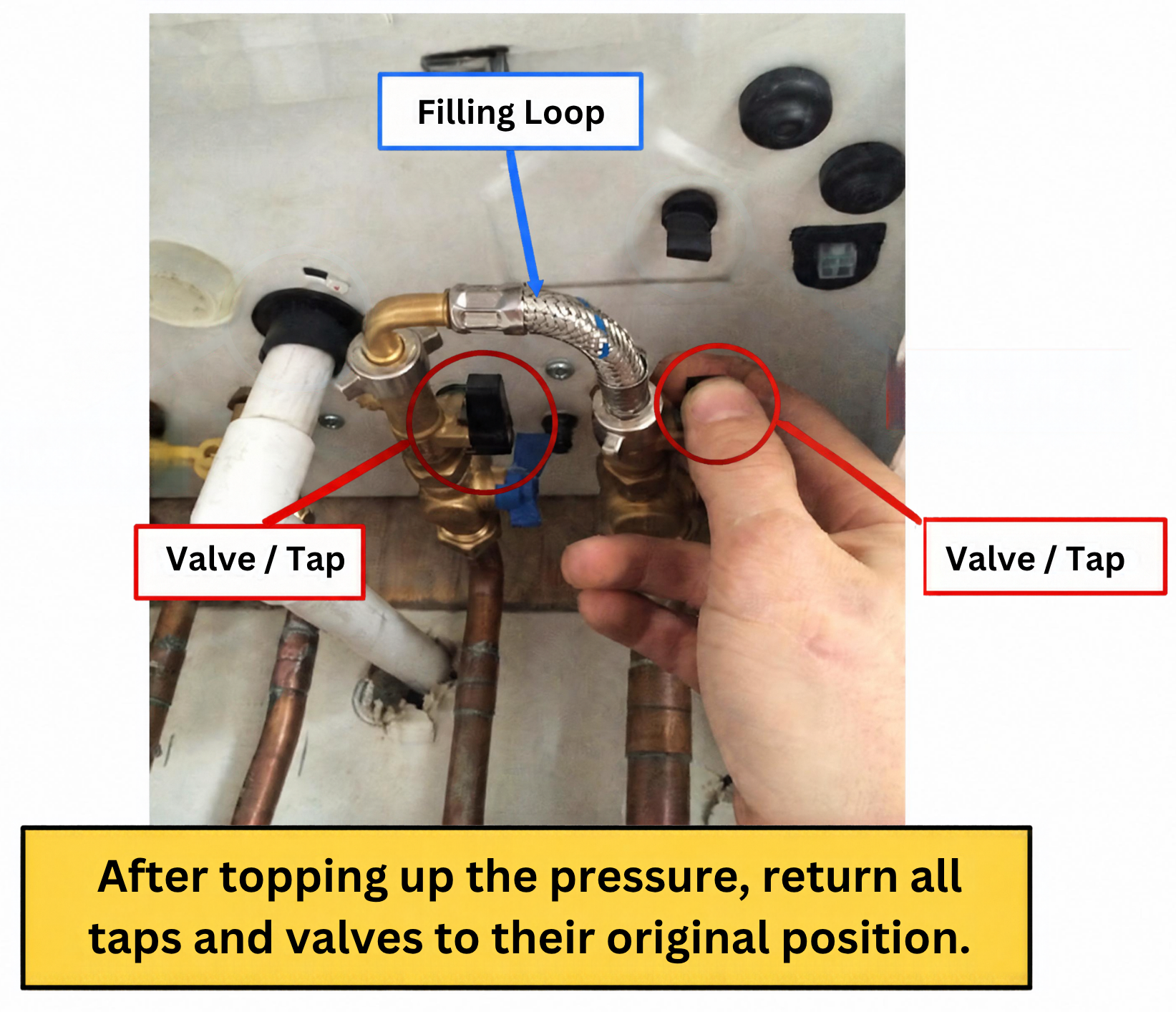
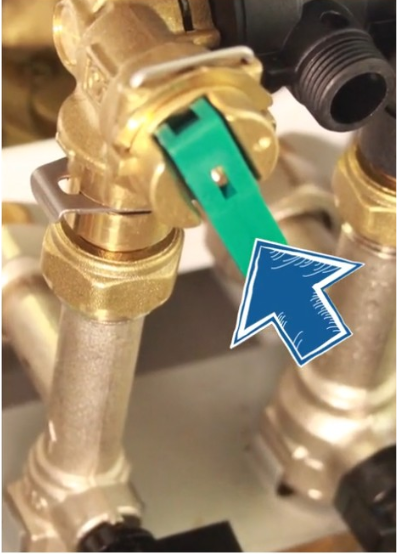
Examples of a filling loop (left) and an Easy Fill lever (right). Your boiler may look different, so always follow instructions for your specific boiler make and model.
💡 Not sure what to do next? Search YouTube for your boiler make and model and follow a video guide. This is usually the quickest and safest way to top up the pressure correctly.
Do I Need Permission to Top Up the Pressure?
No.
Topping up boiler pressure is a normal occupier responsibility and can be done whenever the pressure falls below the recommended level.
Most boilers occasionally need a small top-up over time.
When Should I Contact Cloud Lettings?
Please contact us if:
- The pressure keeps dropping.
- You have topped up the pressure and it quickly falls again.
- You notice a leak from the boiler, pipes or radiators.
- You notice any damp patches on walls, ceilings or floors.
- You have followed the instructions and still have no heating or hot water.
- You are not comfortable carrying out the process yourself.
Frequent pressure loss may indicate a leak or fault that requires further investigation.
- When contacting us, please let us know:
- Your boiler make and model.
- The current pressure reading.
- Whether you have been able to top up the pressure.
- Whether you have noticed any leaks.
- Whether you have noticed any damp patches nearby.
This information helps us identify the likely cause and arrange the most appropriate next steps.
No Hot Water?
If you are temporarily without hot water, you can use a kettle, microwave or hob to heat water while troubleshooting the issue.